The Kelvin Hydrodynamics Laboratory: A World-Class Centre for Marine Engineering Innovation
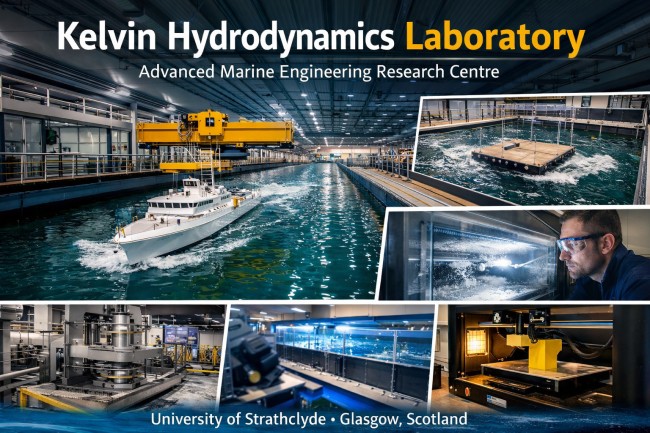
The Kelvin Hydrodynamics Laboratory stands as one of the United Kingdom’s most advanced and respected facilities for marine engineering, naval architecture, and ocean research. Operated by the University of Strathclyde in Glasgow, this pioneering laboratory has served industry partners, researchers, and students since 1962. Today, it remains a cornerstone of cutting-edge maritime innovation, offering state-of-the-art equipment, highly skilled technical staff, and a broad testing capability that supports some of the world’s most complex hydrodynamic challenges.
Understanding the Kelvin Hydrodynamics Laboratory
The Kelvin Hydrodynamics Laboratory is widely known for its world-leading capabilities in studying ship performance, wave dynamics, offshore energy systems, and underwater structures. Located at 80 Acre Road in Glasgow, the facility is equipped with specialised tanks and testing machines that allow precise simulation of real-world marine conditions. Its role spans academic research, commercial engineering development, and hands-on education for the next generation of naval architects and marine engineers.
The Main Towing Tank at Kelvin Hydrodynamics Laboratory
The centrepiece of the laboratory is its large towing tank, designed specifically for detailed hydrodynamic testing.
Towing Tank Specifications at Kelvin Hydrodynamics Laboratory
The towing tank features:
A length of 76 metres, width of 4.6 metres, and depth of 2.5 metres
Adjustable water depth between 1.7 and 2.1 metres
Maximum towing speed of 5 metres per second
A flap-type, force-controlled wave maker
Maximum regular wave height of approximately 0.6 metres
Maximum irregular wave height of around 0.5 metres
Uses of the Towing Tank
This facility is ideal for:
Ship resistance and propulsion testing
Seakeeping and motion analysis
Survivability assessments of damaged ships
Hydrodynamic behaviour of surface-piercing and submerged bodies
Development of marine renewable energy concepts, including floating wind, wave devices, and tidal turbines
Its versatility makes it suitable for research, teaching, and industrial prototype development.
3D Compact Wave Tank for Advanced Wave Interaction Studies
To support more detailed and multidirectional wave research, the Kelvin Hydrodynamics Laboratory includes a sophisticated 3D compact wave tank.
Compact Wave Tank Features
Commissioned in 2020
Dimensions: 9.7 metres × 3.15 metres × 1.35 metres
Fixed water depth of 1 metre
Eight advanced wave makers capable of producing multidirectional waves up to 40 degrees
Regular and irregular waves up to 0.4 metres
Applications of the Compact Wave Tank
This tank is particularly useful for:
Early-stage research on wave-structure interactions
Testing of small-scale autonomous underwater vehicles
Modelling and validation of innovative coastal and offshore systems
It allows researchers to conduct controlled, repeatable experiments essential for proof-of-concept design work.
Specialised High-Speed Flow Testing Equipment
The laboratory also houses purpose-built equipment for understanding friction and turbulence at realistic speeds.
Fully Turbulent Flow Cell (FTFC)
Introduced in 2019, the FTFC is capable of reaching speeds of up to 13 metres per second, equivalent to around 25 knots, mirroring the full-scale service speed of many commercial vessels. It is specifically designed for studying friction resistance caused by varying surface roughness, coatings, and hull treatments.
Biofouling Research through the Slime Farm
Innovative Slime Cultivation System
Launched in 2023, the laboratory’s Slime Farm allows researchers to cultivate marine slime within a matter of weeks. When combined with the FTFC, it enables groundbreaking studies on biofouling, helping the maritime industry reduce drag, fuel consumption, and environmental impact.
Fatigue Testing for Offshore Structures
Resonance Fatigue Machine
Another significant addition is the resonance fatigue testing machine, which supports fatigue life assessment for offshore structures, including offshore wind turbine components. With a load range of –50 kN to +50 kN and frequencies up to 300 Hz, it can simulate nearly one million loading cycles every hour.
Model Manufacturing Workshop at Kelvin Hydrodynamics Laboratory
Precision Model Production
The on-site workshop includes manual and CNC milling machines, lathes, drilling equipment, and industrial-grade 3D printers with a build volume of 300 × 300 × 605 mm. This allows the creation of detailed and accurate physical models used for experimental testing across the facility.
Quick Info
| Category | Information |
|---|---|
| Facility Name | Kelvin Hydrodynamics Laboratory |
| Location | 80 Acre Road, Glasgow, G20 0TL, United Kingdom |
| Established | 1962 |
| Operated By | University of Strathclyde – Department of Naval Architecture, Ocean & Marine Engineering |
| Main Facility | 76m × 4.6m × 2.5m Towing Tank |
| Max Towing Speed | 5 m/s |
| Wave Maker Type | Flap-type, force-controlled |
| Max Wave Height | Regular: 0.6m, Irregular: 0.5m |
| Additional Facility 1 | 3D Compact Wave Tank (9.7m × 3.15m × 1.35m) |
| Wave Tank Features | 8 flap-type wave makers, 40° incident angle, 0.4m max wave height |
| Additional Facility 2 | Fully Turbulent Flow Cell (FTFC) |
| FTFC Speed | Up to 13 m/s (≈25 knots) |
| Additional Facility 3 | Slime Farm for biofouling studies |
| Additional Facility 4 | Resonance Fatigue Machine (–50 kN to +50 kN, up to 300 Hz) |
| Workshop Capabilities | CNC milling, lathe, drilling, 3D printing (300 × 300 × 605 mm) |
| Primary Research Areas | Ship hydrodynamics, seakeeping, offshore wind, wave energy, tidal systems, underwater vehicles |
| Users | Students, researchers, industry clients |
| General Enquiries | [email protected] |
A Hub for Education, Research, and Industry Collaboration
The Kelvin Hydrodynamics Laboratory plays a vital role in supporting university teaching, providing hands-on learning for hundreds of students every year. It also works closely with major industry partners, supporting renewable energy development, offshore engineering innovation, and maritime technology advancement.