Thymely: Redefining Student Engagement Through Intelligent, Human-Centred AI
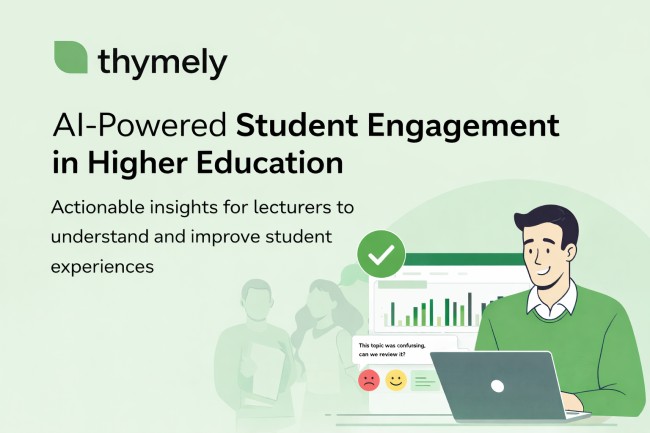
Higher education is undergoing a fundamental shift. Lecturers are expected not only to deliver content but also to understand student experiences, respond to challenges quickly, and foster trust in increasingly diverse classrooms. In this context, Thymely has emerged as a focused and thoughtful solution, helping educators gain real insight into how students are engaging with their courses.
Founded in 2025, Thymely operates at the intersection of education, data, and human-centred design. Rather than overwhelming academics with dashboards and metrics, the platform prioritises clarity, relevance, and action.
Understanding the Purpose Behind Thymely
A Practical Response to Modern Teaching Challenges
University teaching has long relied on end-of-term evaluations to assess student satisfaction and learning outcomes. While useful, these methods often arrive too late to support current learners. Thymely addresses this gap by enabling continuous feedback throughout the academic term.
The platform allows educators to identify learning difficulties early, adjust course delivery, and demonstrate responsiveness while teaching is still underway. This timely approach makes feedback meaningful rather than symbolic.
Why Real-Time Insight Matters
Students are more likely to engage when they feel heard. When lecturers can respond to feedback quickly, it creates a learning environment built on mutual respect and transparency. This is where Thymely’s value becomes especially clear.
How the Platform Supports Educators
Simple Feedback Collection Without Disruption
One of the platform’s strengths lies in its simplicity. Educators can create brief surveys that students complete in minutes. These are designed to minimise fatigue while still capturing valuable perspectives on clarity, pace, workload, and engagement.
Because surveys are short and purposeful, response rates tend to be higher than traditional questionnaires.
AI That Enhances, Not Replaces, Human Judgement
Once feedback is collected, artificial intelligence is used to identify patterns and recurring themes. Instead of reading hundreds of individual responses, lecturers receive structured insights that highlight what requires attention.
Key Outcomes for Educators
Clear identification of problematic topics
Early signs of disengagement
Insight into student confidence levels
Evidence to guide teaching adjustments
Importantly, the final decisions remain with the educator. The technology supports reflection rather than dictating outcomes.
Designed for Classes of Any Size
Maintaining Connection at Scale
Teaching large cohorts often makes personal engagement difficult. The platform is designed to scale effortlessly, enabling lecturers to monitor trends across large groups while still recognising individual concerns.
This balance between scale and sensitivity makes the tool suitable for both small seminars and large lecture-based modules.
The Founders Behind the Vision
Joseph Shin and a Data-Informed Educational Ethos
Joseph Shin brings a background in data science and business, alongside experience in nonprofit initiatives and linguistics-focused software projects. His work reflects a belief that data should empower decision-making without complicating it.

This philosophy is evident in the platform’s clean design and emphasis on actionable insight rather than raw statistics.
Liam Grossman’s Engineering Expertise
Liam Grossman contributes deep technical expertise gained from building large-scale systems in the financial sector. His focus on reliability, performance, and scalability ensures the platform remains robust even as usage grows.

Together, the founders combine analytical depth with engineering precision, resulting in a product that is both intelligent and dependable.
Trust, Transparency, and Student Voice
Strengthening the Learning Relationship
A defining feature of the platform is its role in building trust. When students see their feedback leading to visible changes, they are more likely to participate honestly in future discussions.
This creates a feedback loop where communication improves continuously rather than being confined to formal evaluations.
Responsible Use of Artificial Intelligence
Concerns around AI in education are increasing, particularly regarding surveillance and loss of autonomy. Thymely adopts a measured approach, positioning AI as a support mechanism rather than an authority.
Educators retain control, and student feedback is used constructively rather than punitively.
Why This Approach Stands Out in Educational Technology
Focused Design Over Feature Overload
Many educational platforms attempt to address every possible institutional need. By contrast, this solution concentrates on a single, clearly defined problem: understanding student experience while learning is in progress.
This focus makes adoption easier and reduces the learning curve for educators.
Built for Everyday Academic Practice
The platform is designed for real teaching environments, not just administrative reporting. Its intuitive interface and minimal setup requirements allow lecturers to integrate it into existing workflows without disruption.
Looking Ahead
Supporting the Future of Responsive Teaching
As higher education becomes more student-centred, tools that enable timely understanding will play an increasingly important role. With its small, agile team and clearly articulated mission, Thymely is well positioned to evolve alongside changing academic expectations.
The emphasis on clarity, ethics, and practical value suggests a long-term commitment to improving teaching rather than chasing trends.
Quick Info
| Category | Details |
|---|---|
| Company Name | Thymely |
| Industry | Software Development |
| Founded | 2025 |
| Website | https://thymely.ai |
| Core Purpose | Helping educators understand student engagement and learning challenges through timely insights |
| Primary Users | University lecturers, professors, instructors |
| Key Function | AI-assisted analysis of student feedback |
| Use Case | Identifying learning difficulties and improving courses during teaching |
| Technology Focus | Artificial intelligence, data analysis, education technology |
| Co-Founders | Joseph Shin, Liam Grossman |
| Operating Region | United States |
| Best For | Small to large classes seeking continuous, actionable student feedback |
Conclusion
Thymely represents a thoughtful shift in how educators understand and respond to student needs. By combining intelligent analysis with respect for human judgement, it supports better teaching decisions and stronger learning relationships.
In an environment where engagement, trust, and adaptability are essential, this approach offers a meaningful contribution to the future of higher education.
FAQs
1. What is Thymely used for?
Thymely is used by educators to understand student engagement and learning challenges during a course rather than after it ends. It helps lecturers collect timely feedback, identify problem areas, and make informed improvements while teaching is still in progress.
2. Who can benefit from using Thymely?
The platform is primarily designed for university lecturers, professors, and instructors. However, it is also useful for course coordinators and academic teams who want clearer insight into student experiences across different class sizes and teaching formats.
3. How does Thymely analyse student feedback?
Student responses are analysed using artificial intelligence to identify patterns, trends, and recurring concerns. The system summarises insights in a clear and structured way, allowing educators to focus on key issues without reading every individual response.
4. Is student feedback anonymous on Thymely?
Yes, feedback is collected in a way that encourages honest participation. Anonymity helps students feel comfortable sharing concerns and opinions, which leads to more accurate and meaningful insights for instructors.
5. Does Thymely replace traditional course evaluations?
No, it is designed to complement traditional evaluations rather than replace them. While end-of-term surveys remain valuable, Thymely adds real-time insight, allowing educators to respond to student needs during the learning process instead of after it has finished.